
Castor oil is a very popular natural oil that is widely used in hair care regimes. It is applied to the scalp and hair to enhance shine, combat dryness, and soften hair. Being a viscous liquid, it is often used in scalp massage and home-based hair care preparations.
Using castor oil properly is crucial. Otherwise, you will end up with oily hair that will be hard to wash. Moreover, you need to know the benefits and limitations of castor oil usage before you decide to include it in your regime. This article will explain the application of castor oil to the hair, its frequency and precautions.
Quick Tips
Begin with a little bit of castor oil and do not apply it in large quantities on your scalp. It can be combined with another type of oil to facilitate application. Apply it for some time, and then wash off your hair with shampoo.
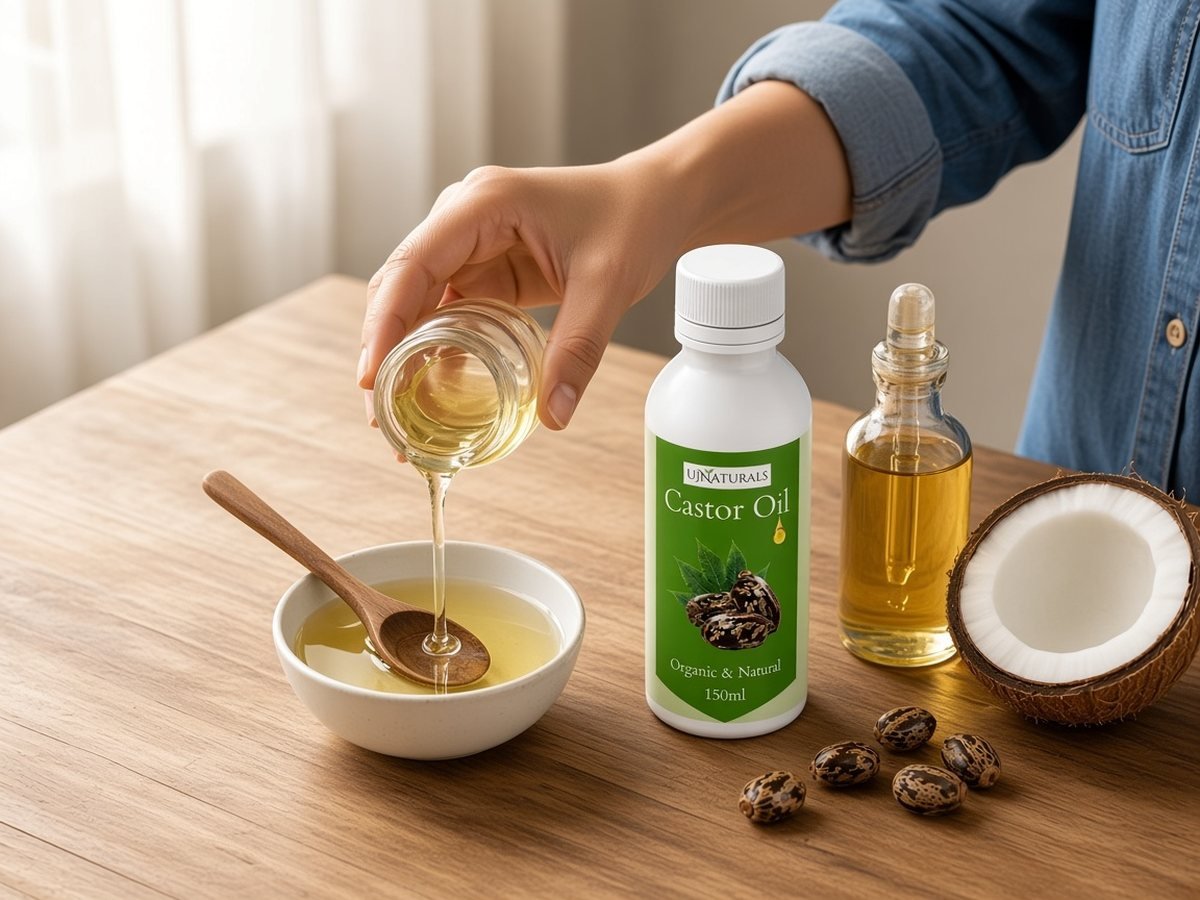
Some simple guidelines that can assist in the proper use of castor oil are:
- Use pure castor oil without any other added ingredients.
- Add coconut or jojoba oil in it if its sticky nature makes it difficult to apply.
- Perform a test on your skin prior to regular application.
- Do not scratch or rub your scalp while applying it.
- Rinse off your scalp properly after the application.
How to Apply Castor Oil to Your Hair
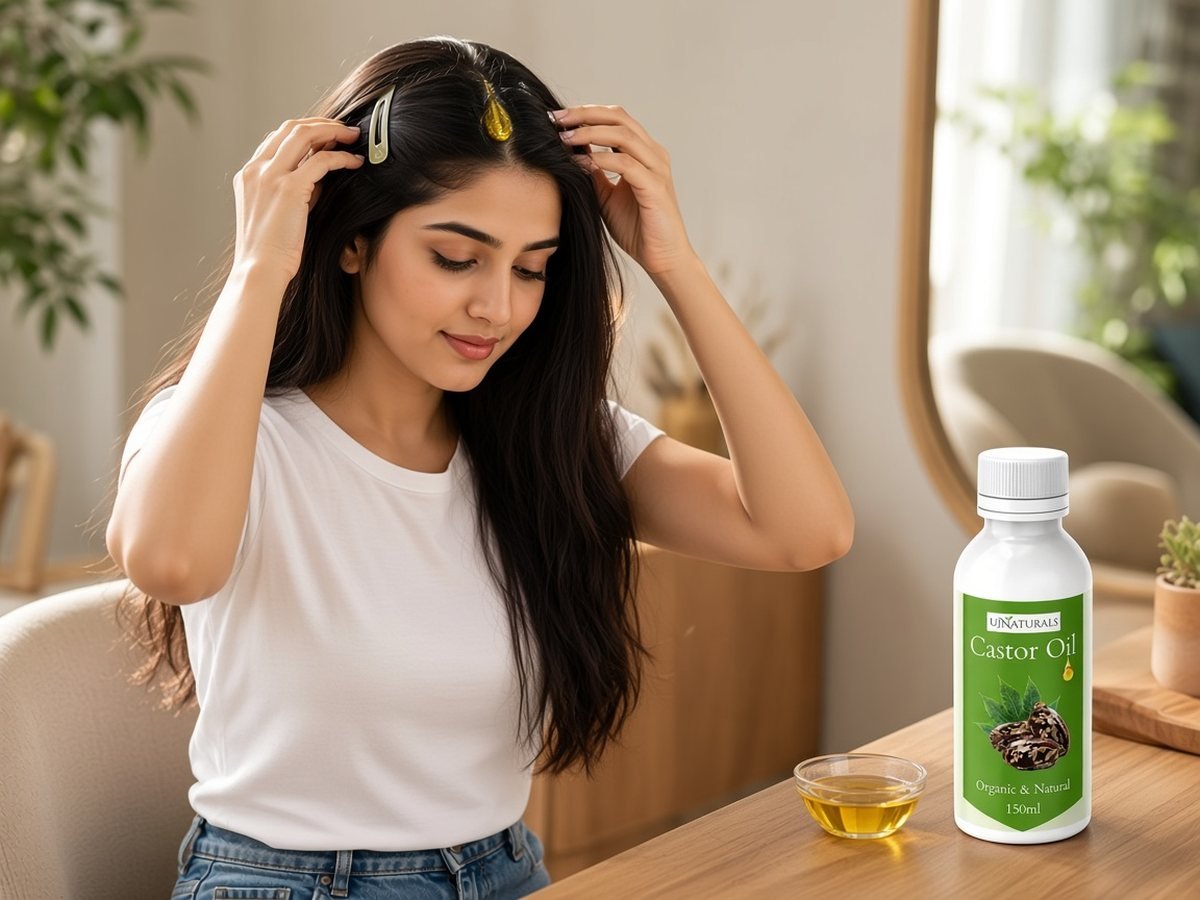
There are no complex processes involved in the application of the oil. Just a small amount of oil and some time is needed to wash your hair after its use.
- Firstly, take a small amount of oil, one or two tablespoons in a small bowl.
If the oil is very thick, add the same amount of coconut, olive, or jojoba oil. Such a mixture will be able to move better through your hair.
- Divide your hair into several parts and massage the mixture onto your scalp using your fingertips.
Do it carefully. Don’t scratch the skin of your head with your nails.
- After the application, put a small amount of mixture in the middle part and ends of your hair.
This part may be dry and need some kind of conditioner.
- Leave the oil on for about 20 – 30 minutes and wash your hair with shampoo.
You may need to wash your hair again if it still smells oily.
What Are the Benefits of Castor Oil for Hair?
The castor oil has ricinoleic acid as well as other fat substances. People apply the castor oil as an integral element of their hair-care regimen due to its viscous composition.
One of the potential advantages could be the ability of this substance to give shine to hair. A systematic study published in the Journal of Drugs in Dermatology found only weak evidence about the potential of castor oil in improving the condition of hair in terms of increasing luster. Still, there was no strong evidence for the promotion of hair growth provided by this substance.
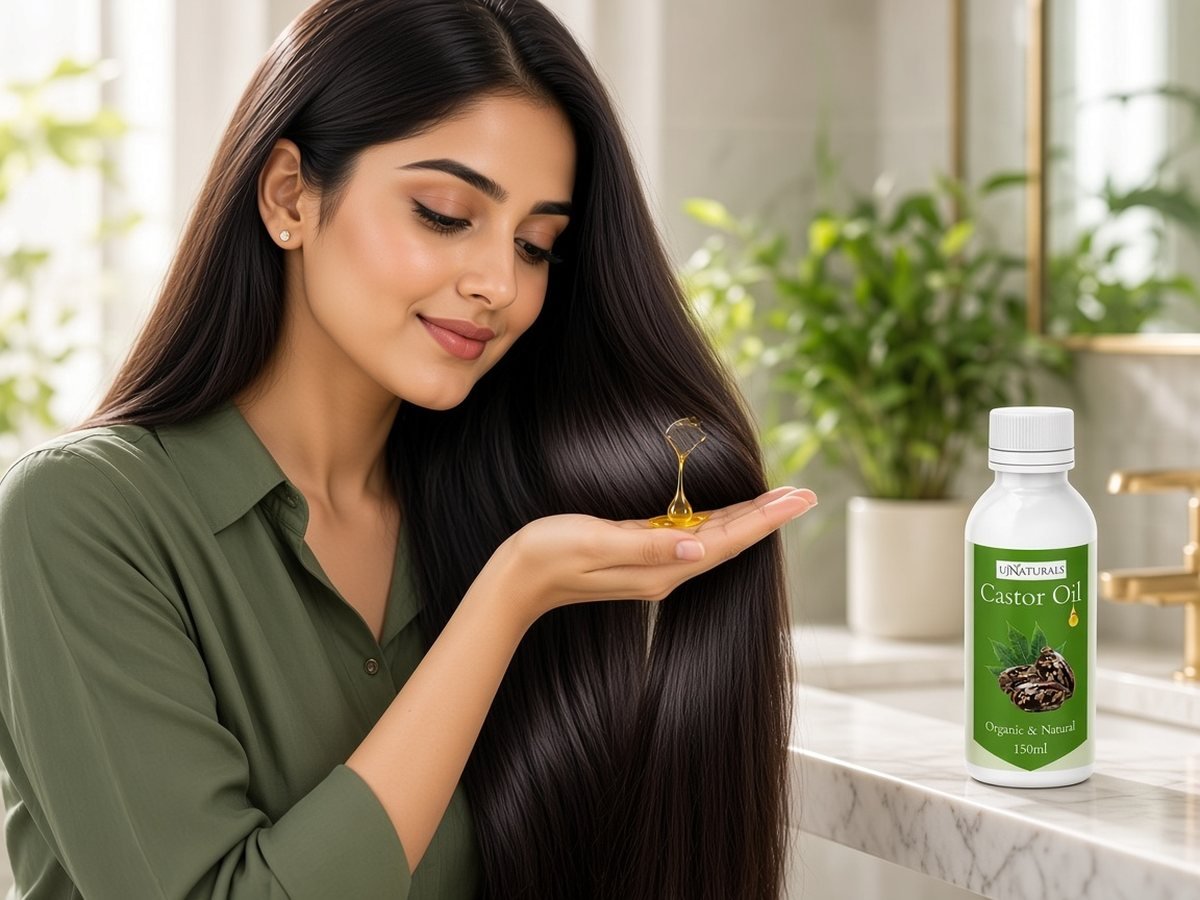
Also, this oil might make hair smoother. The viscosity of this liquid makes it possible to coat hair and improve their condition when used on hair lengths. It is important to distinguish between cosmetic effects and real hair growth. Smoother or shiner hair doesn’t mean that any new hair follicles appear or any hair fall stops.
Different Ways to Use Castor Oil
Here are some ways to incorporate castor oil into your hair care regimen. The choice will depend on the type of hair and ability to wash off the oil from hair.
- Castor oil with coconut oil: Use equal proportions of the oils and apply a little bit to your hair lengths. This is an alternative that is likely to be easier to apply compared to just castor oil.
- Castor oil with jojoba oil: Blend the oils to produce a lighter formula for the application on scalp and hair.
- Castor oil for dry ends: Put one or two drops in your palm and gently apply to the tips of your hair. Be careful not to overuse the oil.
- Massaging castor oil into the scalp: Apply a little bit to certain sections of your scalp and massage.
| Way to use | How to mix | Where to apply |
|---|---|---|
| Castor oil with coconut oil | Equal proportions of both oils | A little bit on hair lengths |
| Castor oil with jojoba oil | Blend for a lighter formula | Scalp and hair |
| Castor oil for dry ends | One or two drops in your palm, no mixing | Tips of your hair |
| Scalp massage | 1 to 2 tablespoons; if very thick, add the same amount of coconut, olive or jojoba oil | Sections of your scalp, using fingertips |
It is not necessary to blend several oils at once. Use a combination of one oil to find out the effects of this hair care remedy on your scalp and hair.
How Often Should You Use Castor Oil?
There are no scientifically validated times for using castor oil in hair. The frequency of using it will depend on the condition of your hair and whether your scalp tolerates the oil.
If you have never used castor oil before, it will be good to use it once a week. You need to see the reaction of your hair after washing it. If your scalp becomes oily after applying it, then you need to discontinue its usage.
Individuals with thin or oily hair might feel comfortable using small amounts of it at the end of their hair. People with dry hair might feel comfortable using it occasionally. Note that using a lot of it will not improve your results. You should avoid applying too much castor oil on your scalp for too long.
| Hair type or situation | How to use it | How often | Watch out for |
|---|---|---|---|
| First time using castor oil | Small amount, leave 20 to 30 minutes, then shampoo | Once a week | Check how your hair reacts after washing |
| Thin or oily hair | Small amounts at the ends of the hair | Once a week or less | Stop if your scalp becomes oily |
| Dry hair or dry ends | One or two drops on the tips of the hair | Occasionally | Do not overuse; more oil will not improve results |
| Sensitive or irritated scalp | Do a skin test first | Do not use on irritated skin | Itching, redness or swelling |
What Should You Know Before Using Castor Oil?
It is important to note that although castor oil is a natural product, its use does not guarantee safety from skin irritation and allergic reactions. There are reports of contact dermatitis caused by the use of castor oil.
Before using it on your scalp, apply a little amount of the product on your skin in order to see if there are any signs of itching, redness, swelling, or any other skin reaction. If there are any reactions to the product, do not use it.
Remember the following:
- Do not use the oil on irritated skin.
- Avoid getting the oil into your eyes.
- Discontinue the use of the product if you notice any itching or redness.
- Do not pull or massage your hair while applying the oil.
- Castor oil should not be used as a remedy for sudden or permanent hair loss.
In case of abnormal hair falling out, bald spots, or other scalp issues, consult a dermatologist as there might be a need for a specific therapy for your hair loss.
FAQs
Does castor oil increase the speed of hair growth?
There is no scientific research which proves that the direct application of castor oil to the scalp increases hair growth speed. Castor oil may only improve hair shine, which is not equal to hair growth.
For how long should I keep castor oil in my hair?
Start with leaving the castor oil for 20-30 minutes before washing it away. Do not leave a lot of oil on your scalp for a long period of time, especially if it is your first experience with the product.
Can I apply castor oil directly to my scalp?
Yes, you can use a little amount of castor oil if you have a healthy scalp without any irritations. Mixing it with a lighter oil will facilitate its application.
Should I apply castor oil to my dry or wet hair?
You can choose to apply it to either dry or slightly damp hair depending on what you feel comfortable with. Dry hair may facilitate the tracking of oil usage while damp may help to distribute it evenly through hair lengths.